Why separate paid and PR budgets inflate CAC, and the retargeting matrix and budget split model we use to make Google Ads and earned media work together.
How siloed budgets inflate CAC
In many SaaS companies, paid media and PR are run by different people with different goals. The paid team chases cost per lead. The PR team chases coverage counts. Neither team uses the other's work, and customer acquisition cost creeps up because every ad has to build trust from zero.
B2B buyers rarely convert on a first click. They compare vendors, read reviews and look for signs that a company is credible. When paid ads lead to landing pages with no third party proof, conversion rates suffer and the paid team responds by bidding more, which makes the problem more expensive.
£180K+
Managed ad spend across M5AZN and CValley
3.2×
Paid ROAS on joined programmes
24
Tier 1 PR placements available as ad proof
What we learned managing paid search for SaaS
Across the joined SEO and paid marketing engagements we ran for M5AZN and CValley, we have managed more than £180K in ad spend. The clearest pattern was that campaigns performed better when landing pages carried earned proof such as press quotes, recognised publication logos and specific outcomes.
The changes were simple. We added a credibility strip of earned coverage above the fold, used journalist quotes as ad extensions and social proof, and aligned the landing page headline with the search query. Paid traffic stayed the same while conversion efficiency improved, which is the cheapest way to lower CAC.
The retargeting matrix
Retargeting is where PR assets work hardest. We split audiences by the stage of their journey. Visitors who read educational content see ads featuring a press mention or original data story. Visitors who viewed pricing or comparison pages see ads with customer outcomes and analyst or journalist quotes. Visitors who started a trial or demo request but did not finish see ads addressing the most common objection, supported by earned proof.
Each cell in the matrix pairs an audience with a type of proof. This stops retargeting from showing the same generic message to everyone and gives each buyer the reassurance they need at that moment.
| Audience | Signal | Proof shown | Goal |
|---|---|---|---|
| Learners | Read a blog or guide | Press mention or data story | Build familiarity |
| Evaluators | Viewed pricing or comparisons | Customer outcomes and journalist quotes | Win the shortlist |
| Stalled | Started trial or demo form | Objection answer with earned proof | Complete conversion |
PR needs distribution to pay back
Earned media has a short natural life. A great quote in a respected publication is seen by that publication's readers once. When the same quote is distributed through paid social, Google Ads landing pages, email sequences and sales decks, it reaches the exact buyers you care about many times.
We run a shared calendar where PR, paid and SEO plan together. PR creates stories, paid tests which story resonates with each ICP segment, and SEO turns the strongest angles into content clusters. This is the pr and ppc flywheel in practice.
A realistic budget split model
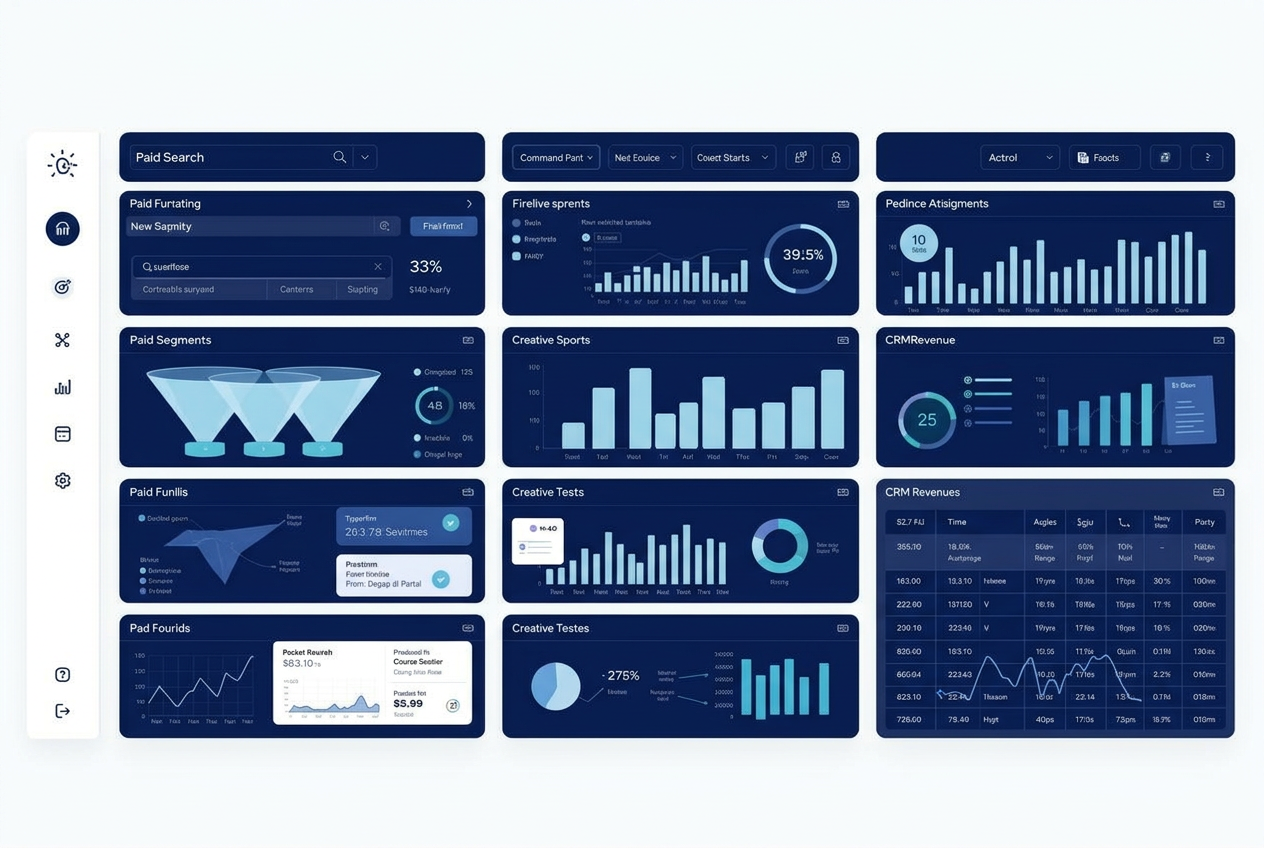
For SaaS companies spending between £5K and £15K per month on growth, we usually recommend roughly 60 to 70 percent on paid media, 15 to 20 percent on PR and authority building, and the remainder on landing page and conversion work. The exact split depends on sales cycle length and how much proof the brand already has.
Companies with little existing coverage benefit from a heavier early PR weighting, because every future ad becomes more efficient once proof exists. Companies with strong proof can push more into paid distribution.
| Area | Share | Monthly at £10K |
|---|---|---|
| Paid media | 60 to 70% | £6,000 to £7,000 |
| PR and authority | 15 to 20% | £1,500 to £2,000 |
| Landing pages and conversion | Remainder | £1,000 to £2,500 |
Landing pages that carry earned trust
Every paid landing page we build follows the same trust structure. The headline mirrors the search query, a credibility strip with recognised publication logos sits directly below it, and specific outcomes appear before the first form. Journalist quotes are placed beside the form, where hesitation is highest, rather than buried in a footer.
We test one variable at a time, starting with the credibility strip because it usually has the largest effect. Paid traffic remains constant during tests so changes in conversion rate can be attributed clearly. Over a quarter, these small improvements compound into a meaningfully lower cost per qualified lead without increasing bids.
Search terms and negative keyword hygiene
Earned proof cannot rescue a campaign that buys the wrong clicks. Every week we review search term reports, add negatives for job seekers, free tool hunters and students, and separate brand, competitor and category campaigns so each gets its own budget and message. Competitor campaigns, in particular, benefit from press proof because buyers are actively comparing vendors.
Clean structure also makes the flywheel measurable. When campaigns are segmented by intent, it becomes obvious which PR stories lift conversion for which audience, and that insight feeds straight back into the next pitch.
Pipeline is the shared scoreboard
The flywheel only works when everyone measures the same thing. We connect UTMs, CRM stages and assisted conversions so the team sees which stories and channels create qualified pipeline, not just clicks or mentions.
If you want google ads saas marketing that uses earned proof instead of fighting for trust alone, our paid marketing and HARO and digital PR services are built to run as one programme.
Next step
Want this applied to your SaaS?
Book a growth audit and we will map SEO, PR, PPC, SEM and paid marketing priorities for your current stage.
Book a growth audit