The response sprint, founder soundbite library and newsroom setup behind our HARO link building for SaaS, plus how each mention becomes commercial proof.
The problem with generic journalist responses
Journalist request platforms such as HARO, Qwoted and Featured receive hundreds of responses for popular queries. Most of them are generic, late or written by someone who clearly has no real expertise. Journalists can tell within one sentence, and those responses are ignored.
Our approach to haro link building for saas is built around one idea: give the journalist a quote they can publish without editing, from an expert they can verify in under a minute. Everything in our process exists to make that possible at speed.
24
Tier 1 PR placements secured
15 min
Target draft time per request
10 to 20
Relevant requests answered weekly
The 15 minute response sprint
Requests are monitored throughout the UK and US working day. When a relevant query lands, the assigned PR specialist has a target of fifteen minutes to produce a draft. The draft follows a fixed structure: a one line credential, a direct answer to the journalist's question in two or three sentences, one supporting data point or example, and a short closing line offering more detail.
Speed matters because many journalists stop reading once they have enough usable quotes. In our experience, responses submitted in the first hour are far more likely to be used than those submitted later the same day, provided the quality is there.
| Part | Length | What it does |
|---|---|---|
| Credential line | 1 sentence | Proves the expert is worth quoting |
| Direct answer | 2 to 3 sentences | Gives a publishable quote with no editing |
| Proof point | 1 data point or example | Adds originality and trust |
| Closing offer | 1 line | Invites follow up questions |
The founder soundbite library
Fast responses only work if the expertise is already captured. During onboarding we interview founders, product leaders, sales leaders and marketing leaders and build a soundbite library. It contains their opinions on category trends, hiring, pricing, AI, security, remote work, fundraising and the specific problems their product solves.
Each soundbite is approved by the expert in advance, along with topics they will not comment on. When a request appears, the PR team adapts an approved view rather than inventing one. That keeps every response accurate and authentic while still meeting the fifteen minute target.
Building a newsroom before pitching
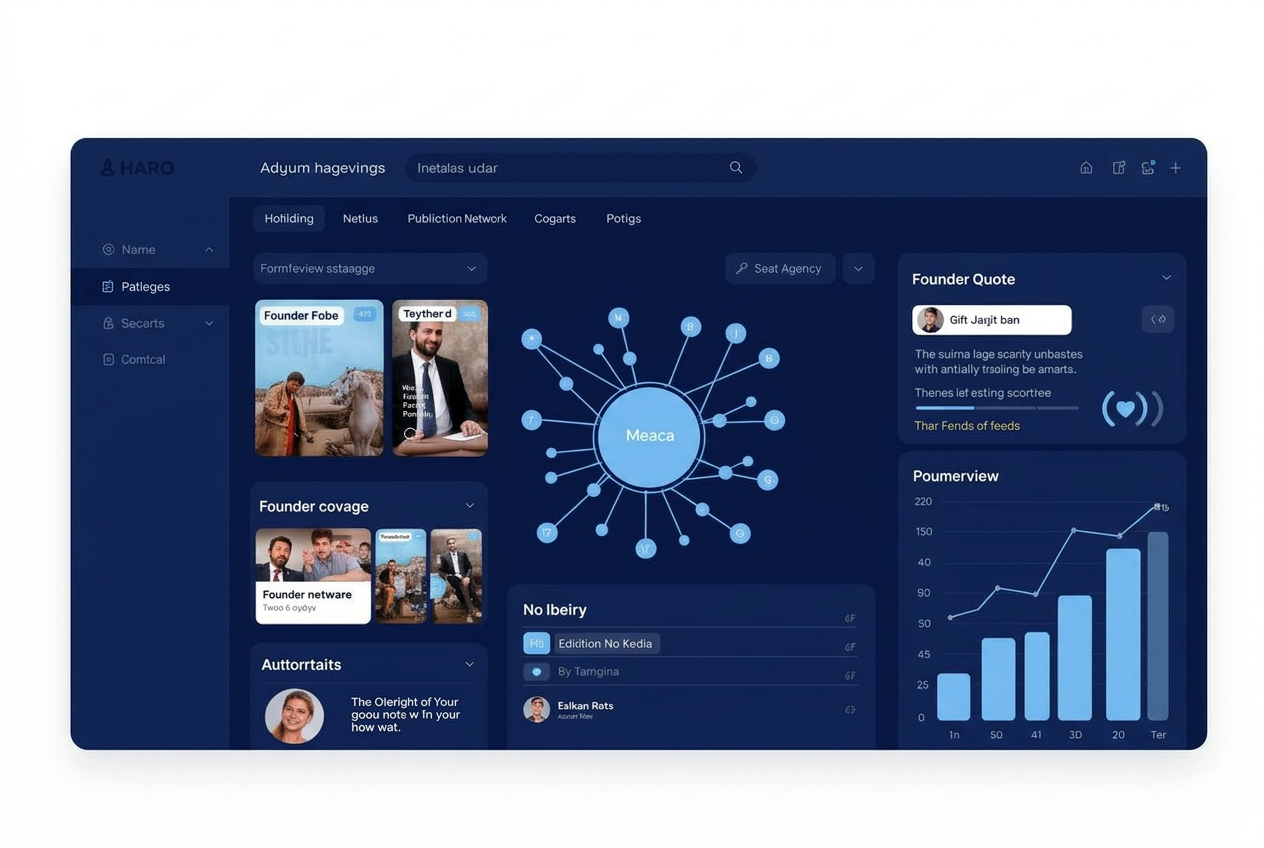
Tier 1 press mentions depend on trust. Before we start pitching, we make sure the client has a simple press page with founder bios, headshots, company facts, product screenshots and links to previous coverage. A journalist checking a source should find everything they need instantly.
This step is often skipped, and it costs placements. For B2B SaaS companies in finance, security, AI and data, editors are cautious about who they quote. A clear newsroom reduces that risk and noticeably increases the acceptance rate of responses.
Turning a mention into commercial proof
A published mention is the start of its value, not the end. We confirm indexation, record whether the link is followed, note the anchor and target page, and add the placement to the client's authority report. Across our programmes we have secured 24 Tier 1 PR placements, and each one is treated as an asset.
We then hand the coverage to sales and marketing. Logos of publications go onto landing pages, quotes go into ad creative and sales sequences, and the strongest stories become founder posts on LinkedIn. This is how b2b saas digital pr supports search, paid marketing and sales at the same time.
Choosing which requests to answer
Answering everything is a fast way to burn credibility. We filter requests by three rules: the outlet must reach the client's buyers or carry strong search authority, the expert must have genuine experience of the topic, and the answer must be possible without inventing data. Requests that fail any rule are skipped, even when the publication is well known.
This discipline keeps acceptance rates healthy and protects the expert's reputation with journalists. Editors notice when the same source appears thoughtful every time, and repeat contributors are often contacted directly for future stories, which is where the most valuable coverage comes from.
| Signal | Weight | Example |
|---|---|---|
| Audience fit | High | Finance publication for a fintech SaaS |
| Search authority | Medium | Followed link from a trusted domain |
| Expert fit | High | Security question for a CISO founder |
| Deadline | Low | Same day turnaround still possible |
Measuring digital PR beyond coverage counts
Coverage counts on their own say little about value. We track four outcomes for every placement: whether it earned a followed or unfollowed link, the authority and relevance of the domain, referral traffic and assisted conversions, and whether the mention appears in AI answer engines for category questions. A single well placed mention can outperform ten weak ones on all four measures.
Reporting this way also shows founders where their time is best spent. If finance publications drive demo requests while general tech outlets only drive traffic, we shift the soundbite library and pitching focus accordingly.
What a realistic weekly cadence looks like
For a typical client we respond to between ten and twenty relevant requests per week, alongside one proactive pitch built around original data or a founder opinion. Not every week produces a Tier 1 mention, but a consistent cadence produces a steady flow of quality coverage over a quarter.
If you want journalist coverage that also strengthens your backlink profile, our HARO and digital PR service runs this exact sprint, soundbite library and newsroom process for your team.
Next step
Want this applied to your SaaS?
Book a growth audit and we will map SEO, PR, PPC, SEM and paid marketing priorities for your current stage.
Book a growth audit